How State Laws Can Block Access to Ancestors’ Psychiatric Records
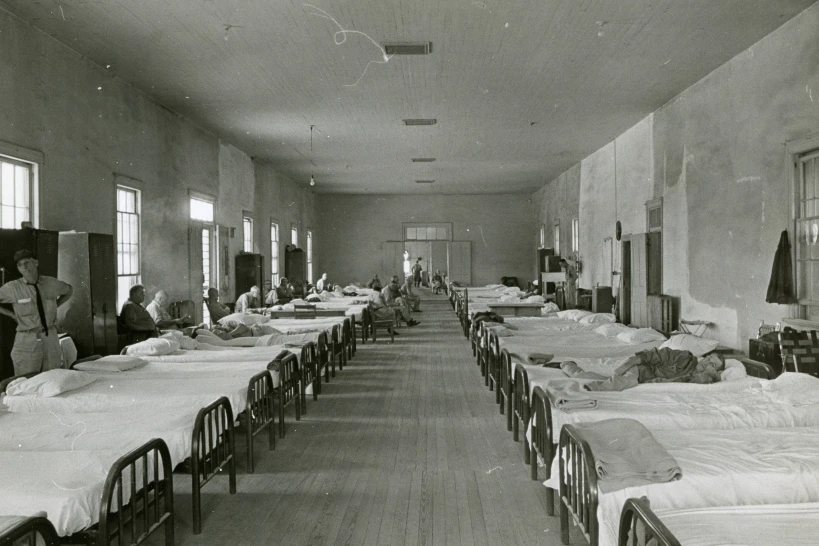
Researchers and families tracing their genealogy are facing growing obstacles as strict state privacy laws limit access to decades-old psychiatric hospital records of deceased relatives.
Families, historians, genealogists, and academic researchers across the United States are increasingly encountering legal and bureaucratic barriers when attempting to access psychiatric records belonging to deceased ancestors, as state privacy laws continue to restrict the release of sensitive mental health documents even decades after a patient’s death. The issue has become more visible in recent years as growing interest in genealogy, family history, hereditary health research, and historical institutional studies has led more Americans to seek information about relatives who were once treated or confined in psychiatric hospitals, mental institutions, sanitariums, and state-run asylums. While birth certificates, census data, military files, and death records are often available through archives or public databases after certain time periods, psychiatric records remain among the most heavily protected categories of historical documentation in many states.
Mental health records are generally considered highly sensitive under both federal and state privacy rules, and in numerous jurisdictions there are no clear pathways for descendants to gain access, even when the patients involved died many decades ago. Advocates for stricter privacy protections argue that psychiatric files often contain deeply personal information including diagnoses, physician notes, family conflicts, allegations of abuse, sexual history, substance use, criminal accusations, and behavioral assessments that could unfairly stigmatize descendants or violate the dignity of deceased patients. State governments have therefore maintained varying levels of confidentiality laws that continue to shield those records long after death.
However, critics say the lack of consistency between states creates confusion and prevents legitimate historical and medical research from taking place. Some states allow partial access after a waiting period of 50 to 100 years, while others require court orders, proof of direct lineage, or approval from health departments that may deny requests entirely. In several states, laws governing mental health records are so restrictive that archives refuse to confirm whether records even exist.
Researchers studying the history of institutionalization, mental illness treatment, forced sterilization programs, or psychiatric abuses during the twentieth century argue that these restrictions can erase important historical evidence and make it difficult to document systemic mistreatment. Genealogists also say many families are trying to uncover the truth about relatives who disappeared into state institutions generations ago, especially during periods when mental illness carried heavy social stigma and institutionalization was often hidden from public view. In some cases, descendants have only vague family stories suggesting that a relative was “sent away” or died inside a psychiatric hospital, with no accessible records explaining what actually happened.
Legal scholars note that the tension largely stems from the intersection of privacy rights, medical ethics, archival policy, and historical transparency. Federal health privacy laws such as the Health Insurance Portability and Accountability Act, commonly known as HIPAA, generally protect medical records for 50 years after death, but states are allowed to impose even stricter protections on psychiatric information. As a result, state laws differ dramatically regarding who may access records, what documents may be released, and how long restrictions remain in effect.
Some states permanently seal certain psychiatric records unless a judge authorizes disclosure. Others transfer old institutional files to state archives but continue limiting public access under health confidentiality statutes. Archivists say they are often placed in difficult positions because they must balance legal obligations, ethical considerations, and public interest while interpreting outdated or unclear laws written decades before digital genealogy databases became widespread.
The problem is especially significant for researchers investigating historical abuses tied to mental health institutions, including overcrowding, involuntary confinement, racial discrimination, abuse of women, forced labor, and eugenics programs that targeted vulnerable populations during the nineteenth and twentieth centuries. Historians argue that limited access to records can prevent families from understanding how relatives were treated and can hinder broader efforts to document patterns of institutional misconduct. Disability rights advocates have also pushed for more transparent historical access policies while emphasizing the need to preserve patient dignity and avoid sensationalizing mental illness.
In recent years, some states have begun reevaluating their archival rules to create limited research pathways for descendants and scholars. Proposed reforms in several legislatures have included allowing access after longer waiting periods, permitting genealogical access with proof of lineage, or redacting particularly sensitive personal details before records are released. Supporters of reform argue that descendants deserve the ability to understand family medical histories and learn the truth about relatives whose lives may have been shaped by social prejudice, inadequate medical care, or institutionalization practices that are now viewed critically.
Opponents warn that weakening confidentiality protections could discourage trust in mental health systems and expose intimate details that patients never intended to become public. Ethical concerns are particularly complicated because psychiatric records frequently include information about third parties, including spouses, children, caregivers, or other patients, whose privacy rights may still be relevant even if the original patient is deceased. Technology has further intensified the debate because digital archives and online genealogy platforms can spread historical information rapidly once records are released.
Historians caution that context is essential when interpreting psychiatric files created under outdated medical standards, since many diagnoses and treatments reflected social biases of their time rather than modern scientific understanding. Conditions once used to justify institutionalization included behaviors or identities that are no longer considered illnesses today. Researchers therefore argue that access to records should be accompanied by responsible historical interpretation rather than sensational public exposure.
The issue also raises broader questions about how societies remember vulnerable populations whose experiences were historically hidden from public records. Families searching for lost ancestors often describe emotional journeys involving unanswered questions, secrecy, shame, and attempts to reconstruct fragmented histories erased by institutional systems. Some descendants discover that relatives who were labeled mentally ill may actually have suffered from epilepsy, trauma, developmental disabilities, postpartum depression, addiction, or social nonconformity rather than severe psychiatric disorders.
Others seek records simply to identify burial locations or understand the circumstances surrounding a relative’s death. As public interest in ancestry research continues to grow, pressure is increasing on lawmakers, archives, and health agencies to modernize policies governing access to historical psychiatric records. Yet there remains no national standard, leaving researchers and families dependent on a patchwork of state laws that can vary dramatically across the country.
The debate over these records ultimately reflects a broader struggle between protecting personal privacy and preserving historical truth, with lawmakers continuing to wrestle over how to balance the dignity of deceased patients against the public’s interest in understanding family history, medical heritage, and the often-overlooked history of psychiatric institutions in America.
May. 25, 2026