Trump Pardons Former Puerto Rico Governor Wanda Vázquez Garced
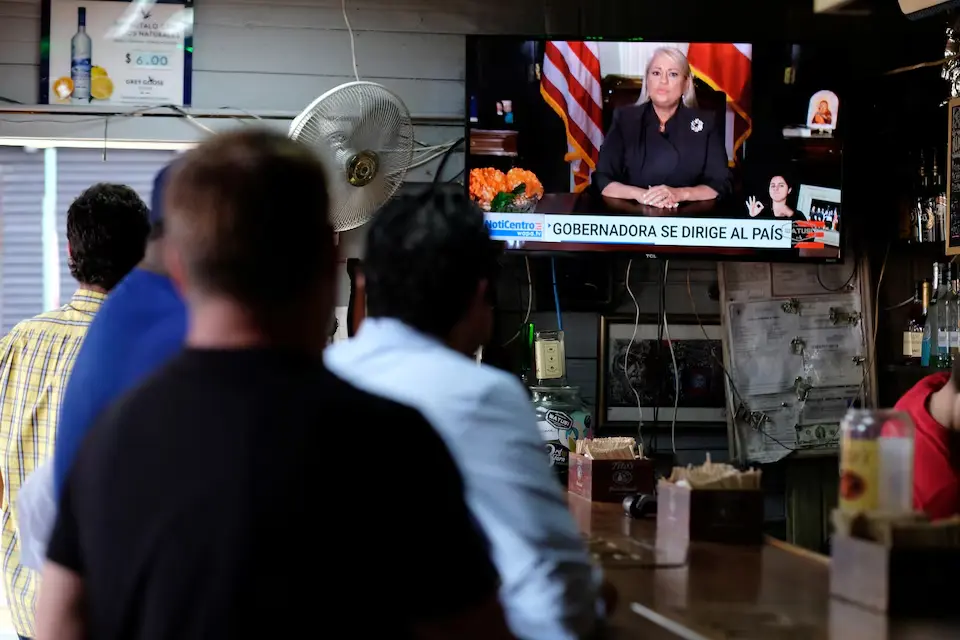
Former U.S. President has issued a pardon to former governor , ending a high-profile federal case. The decision has reignited debate over political corruption, justice, and the use of presidential clemency.
Former U. S. President Donald Trump has granted a full presidential pardon to Wanda Vázquez Garced, the former governor of Puerto Rico, bringing a dramatic conclusion to one of the island’s most closely watched political corruption cases.
The pardon, announced through official channels, effectively ends federal legal proceedings against Vázquez and restores her civil rights, a move that has generated strong reactions across Puerto Rico and the broader United States. Vázquez Garced served as governor of Puerto Rico from 2019 to 2021, assuming office during one of the most turbulent periods in the island’s modern political history. Her rise to the governorship came after the resignation of Governor Ricardo Rosselló, who stepped down amid massive protests sparked by leaked messages and allegations of misconduct.
As secretary of justice at the time, Vázquez was next in the constitutional line of succession, and she took office pledging stability, transparency, and reform. However, Vázquez’s tenure and post-governorship years were overshadowed by federal investigations. In 2022, U.
S. authorities charged her with public corruption offenses related to alleged campaign finance violations. Prosecutors accused her of participating in a scheme involving illegal political contributions from individuals seeking favorable treatment from the Puerto Rican government, including a former banker and a political consultant.
The case was framed by federal authorities as part of a broader effort to combat corruption in Puerto Rico’s political system, which has seen multiple high-ranking officials prosecuted over the past decade. Vázquez Garced consistently denied wrongdoing. Her legal team argued that the charges were politically motivated and that the evidence presented by prosecutors was weak and unreliable.
In 2023, a federal jury was unable to reach a unanimous verdict, resulting in a mistrial. While prosecutors signaled that they were considering whether to retry the case, the legal uncertainty continued to hang over Vázquez, affecting her personal life and public standing. The pardon issued by Donald Trump puts a definitive end to that uncertainty.
Under the U. S. Constitution, the president has broad authority to grant pardons for federal crimes, and such pardons erase legal penalties and prevent further prosecution for the offenses covered.
In a statement released by Trump’s office, the former president described Vázquez as a victim of prosecutorial overreach and emphasized what he characterized as flaws in the federal government’s handling of corruption cases in U. S. territories.
Trump’s decision aligns with his broader record on the use of executive clemency. During his presidency, and even after leaving office, Trump has frequently argued that the justice system is susceptible to political bias and that pardons are sometimes necessary to correct what he views as injustices. Supporters of the pardon say the mistrial demonstrated reasonable doubt and that continuing to pursue Vázquez would have been an unfair use of government resources.
Critics, however, see the pardon very differently. Anti-corruption advocates in Puerto Rico argue that the decision undermines efforts to hold powerful officials accountable and sends the wrong message to a public that has repeatedly demanded cleaner governance. Puerto Rico has faced a series of corruption scandals involving governors, legislators, mayors, and agency heads, contributing to widespread public distrust in political institutions.
For many residents, federal prosecutions have represented one of the few effective tools for accountability, given the island’s complex political and fiscal challenges. Public reaction on the island has been sharply divided. Some political allies and supporters of Vázquez welcomed the news, describing it as long-overdue vindication.
They argue that she was unfairly targeted because of her position and that the collapse of the case proved she should never have been charged. Others, including civil society groups and opposition figures, expressed anger and disappointment, staging protests and calling for renewed local reforms to combat corruption without reliance on federal intervention. The pardon also has broader political implications.
It has revived discussions about the relationship between Puerto Rico and the federal government, particularly regarding oversight, autonomy, and the application of federal law. As a U. S.
territory, Puerto Rico does not have voting representation in Congress, yet it is fully subject to federal criminal jurisdiction. Some commentators argue that high-profile pardons issued by mainland political figures reinforce perceptions of unequal power dynamics and limited local control. From a legal perspective, the pardon closes the chapter on the Vázquez case but does not erase the broader context in which it unfolded.
Federal authorities have continued to pursue other corruption cases in Puerto Rico, and local watchdog groups insist that systemic reforms are still urgently needed. These include stricter campaign finance rules, greater transparency in government contracting, and stronger ethics enforcement mechanisms. For Donald Trump, the decision adds another controversial entry to his legacy of executive clemency.
Supporters view it as consistent with his skepticism toward federal prosecutors and institutions, while critics see it as part of a pattern of rewarding political allies or figures who align with his views. The pardon has already become a talking point in political debates, particularly as discussions continue about the future of U. S.
politics and the role of accountability at the highest levels of government. Wanda Vázquez Garced, meanwhile, has stated that she is grateful for the pardon and that she hopes to move forward with her life. In a brief statement, she reiterated her innocence and said the experience had taken a significant personal toll.
Whether she will attempt a return to public life remains unclear, and many observers believe that public opinion in Puerto Rico may make such a comeback difficult. Ultimately, the pardon highlights enduring tensions between justice, politics, and power. For Puerto Rico, it underscores the ongoing struggle to rebuild public trust after years of scandal and crisis.
For the United States, it serves as another reminder of how presidential powers can shape legal outcomes long after courtrooms fall silent. As debate continues, the case of Wanda Vázquez Garced is likely to remain a reference point in discussions about corruption, accountability, and the far-reaching consequences of executive clemency.
Mar. 12, 2026