Blue Origin Investigates Rocket Explosion as Public Is Warned About Possible Wreckage Washing Ashore
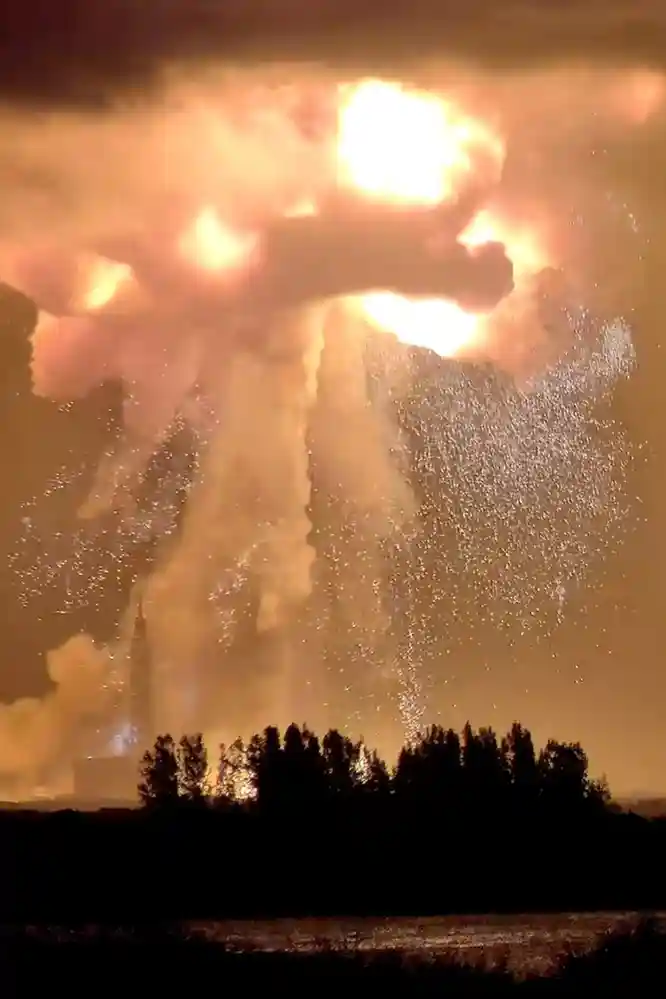
Blue Origin is investigating a rocket explosion after authorities warned the public that debris from the incident could wash ashore along nearby coastal regions, prompting safety concerns and cleanup preparations.
Blue Origin has launched an investigation following a rocket explosion that triggered warnings from authorities about the possibility of wreckage and debris washing ashore along coastal areas near the launch region. Officials have urged the public to avoid touching or collecting any suspected debris connected to the incident as safety teams, environmental agencies, and aerospace investigators continue monitoring affected areas. The explosion occurred during a mission connected to Blue Origin’s ongoing rocket development and commercial space operations, drawing immediate attention from federal regulators, emergency responders, and the wider aerospace industry.
Initial reports indicated that the rocket experienced a major malfunction shortly after launch operations began, resulting in an explosion that scattered debris across sections of the surrounding area and potentially into nearby waters. Investigators are now working to determine the exact cause of the failure, including whether the incident involved engine systems, fuel components, software issues, structural failure, or launch procedure complications. Authorities have issued public advisories warning residents, fishermen, beach visitors, and coastal communities that pieces of rocket wreckage could drift ashore over the coming days depending on ocean currents and weather conditions.
Officials stressed that some debris materials may contain hazardous substances or sharp metallic fragments that could pose risks to public health and safety if handled improperly. Cleanup crews and environmental response teams have been placed on standby to identify and recover debris found along beaches and waterways while minimizing ecological damage. Blue Origin stated that safety remains its top priority and confirmed that emergency response procedures were activated immediately following the explosion.
Company representatives said teams are cooperating fully with regulatory authorities and technical experts as part of a comprehensive investigation into the incident. The company also emphasized that no injuries to the public had been reported at the time of the initial investigation, although authorities continued evaluating the full extent of the blast area and surrounding environmental impact. The rocket involved in the incident was reportedly connected to Blue Origin’s broader efforts to expand commercial spaceflight, satellite deployment capabilities, and reusable rocket technology.
The company, founded by Jeff Bezos, has become one of the leading private aerospace firms competing in the growing commercial space sector alongside companies including SpaceX. Blue Origin has invested heavily in reusable launch systems, lunar exploration technology, tourism-focused suborbital missions, and partnerships linked to future government and private space projects. Aerospace analysts say rocket failures, while relatively uncommon, remain a known risk within the industry due to the extreme technical complexity involved in launch operations and propulsion systems.
Experts note that each incident typically results in extensive engineering reviews aimed at identifying mechanical weaknesses, operational mistakes, or software problems before future missions resume. Federal aviation and aerospace regulators are expected to participate in the investigation process to ensure compliance with safety standards and determine whether additional launch restrictions or corrective measures are necessary. Environmental organizations are also monitoring the situation closely due to concerns regarding marine pollution and the potential impact of debris on wildlife habitats, fisheries, and coastal ecosystems.
Authorities warned that members of the public should report any suspicious objects believed to be connected to the explosion rather than attempting to remove them independently. Local emergency agencies have established communication channels and online reporting systems to help residents notify officials about debris sightings. The incident has generated renewed discussions about the risks associated with the rapid expansion of private space activity, especially as commercial launches become increasingly frequent across multiple regions of the United States.
Critics argue that stronger oversight and environmental protections may be needed as more companies enter the space industry, while supporters of commercial aerospace development emphasize the importance of innovation, scientific progress, and economic growth connected to private launch programs. Investors and industry observers are closely watching the outcome of the investigation because the findings could influence future launch schedules, insurance costs, regulatory policies, and public confidence in private spaceflight operations. Blue Origin has not yet announced a timeline for returning affected rocket systems to service, stating that launch activities related to the investigation will remain paused until safety reviews are completed.
The explosion also comes at a time of increasing global competition in the aerospace sector as private companies and governments race to develop advanced launch capabilities, satellite infrastructure, lunar missions, and future crewed exploration programs. Analysts say incidents such as this highlight both the technological ambition and operational risks involved in modern space exploration efforts. Coastal authorities meanwhile continue monitoring shorelines for debris while urging the public to remain cautious and follow official guidance as recovery operations and technical investigations proceed in the aftermath of the rocket explosion.
June. 1, 2026