Ancient Whale Graveyard in the Indian Ocean Reveals Thriving Deep-Sea Ecosystem
Scientists have discovered that an ancient whale graveyard on the floor of the Indian Ocean supports a remarkably diverse ecosystem, offering new insights into how marine life thrives in one of Earth's most extreme environments.
An extraordinary discovery deep beneath the waters of the Indian Ocean has revealed an ancient whale graveyard teeming with life, providing scientists with a rare glimpse into one of the ocean’s most fascinating and least understood ecosystems. The site, located thousands of meters below the surface, contains the remains of numerous whales that sank to the seafloor over many centuries, creating a unique habitat that continues to support a remarkable variety of marine organisms. Researchers studying the area say the whale graveyard demonstrates how the death of some of the largest animals on Earth can give rise to vibrant ecosystems that persist for decades and even centuries.
The finding is helping scientists better understand the interconnected nature of life in the deep sea and the critical role whales play in marine environments long after their deaths. When a whale dies in the open ocean, its massive body eventually sinks to the seafloor in an event known as a whale fall. These whale falls become concentrated sources of nutrients in an environment where food is often scarce.
The carcass provides sustenance for a wide range of scavengers, bacteria, worms, crustaceans, mollusks, and other deep-sea organisms. Over time, an entire ecosystem develops around the remains, transforming what might appear to be a graveyard into a thriving center of biological activity. Scientists have long known that individual whale falls can support life for many years, but the discovery of a large concentration of whale remains in a single area offers an unprecedented opportunity to study how multiple whale falls interact and influence biodiversity across a broader region.
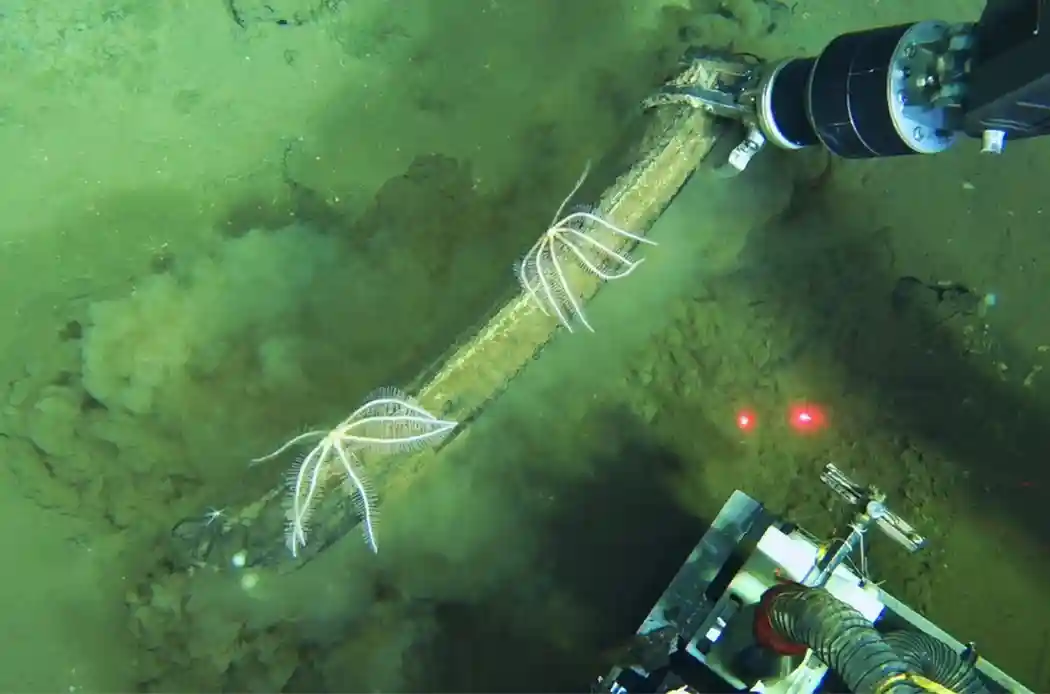
Researchers exploring the ancient whale graveyard used advanced underwater technologies, including remotely operated vehicles, high-resolution cameras, and deep-sea mapping equipment. These tools allowed them to document the skeletal remains of numerous whales scattered across the ocean floor and observe the diverse communities of organisms living among the bones. The images revealed an ecosystem rich with life, including specialized species that have evolved to depend on whale falls as a primary source of food and habitat.
Many of these organisms are rarely seen elsewhere, making the site particularly valuable for scientific research. The discovery highlights the importance of whale carcasses in sustaining deep-sea biodiversity. In the dark depths of the ocean, where sunlight cannot penetrate and food resources are limited, whale falls function as nutrient-rich islands.
The decomposition process occurs in several stages, each attracting different groups of organisms. During the initial scavenger stage, sharks, fish, and large crustaceans consume soft tissues. This phase can last for months or years depending on the size of the whale and local environmental conditions.
Once the soft tissue has been largely removed, enrichment opportunists such as worms, small crustaceans, and mollusks colonize the surrounding sediments, feeding on organic material released during decomposition. The final stage is dominated by specialized bacteria that break down lipids trapped within the bones, creating chemical conditions that support unique communities of organisms. One of the most fascinating inhabitants of whale-fall ecosystems is the bone-eating worm known as Osedax.
These unusual creatures lack a traditional mouth and digestive system. Instead, they use root-like structures to penetrate whale bones and rely on symbiotic bacteria to break down organic compounds. Scientists studying the Indian Ocean whale graveyard have observed evidence of organisms similar to Osedax and other specialized species that appear uniquely adapted to life among decaying whale remains.
Such discoveries are helping researchers understand evolutionary processes and the ways organisms adapt to extreme environments. The whale graveyard also provides valuable insights into the history of whale populations in the Indian Ocean. By examining skeletal remains and analyzing bone samples, scientists can learn more about species distribution, migration patterns, and historical ocean conditions.
Some of the bones found at the site are believed to be centuries old, preserving a record of marine life that stretches back through generations. This information can contribute to conservation efforts by improving understanding of how whale populations have changed over time and how marine ecosystems respond to environmental pressures. Researchers are particularly interested in the role whale falls may have played in the evolution and dispersal of deep-sea species.
Some scientists believe whale falls act as stepping stones across the ocean floor, allowing organisms to move between isolated habitats such as hydrothermal vents and cold seeps. These environments share certain chemical characteristics and support specialized communities that rely on chemosynthesis rather than sunlight for energy. The presence of multiple whale falls within a relatively confined area could have facilitated the movement and genetic exchange of species over long distances, influencing patterns of biodiversity in the deep ocean.
The discovery underscores the importance of protecting marine ecosystems, including those hidden far beneath the ocean surface. Deep-sea habitats face increasing pressure from human activities such as deep-sea mining, pollution, climate change, and overfishing. Although the whale graveyard is located in a remote region, scientists warn that disturbances to ocean environments can have far-reaching consequences for species that depend on stable conditions to survive.
Understanding how whale-fall ecosystems function can help inform strategies for conserving biodiversity and managing human impacts on marine ecosystems. Climate change is another factor influencing the future of whale-fall communities. Rising ocean temperatures, changing circulation patterns, and increasing levels of ocean acidification may affect decomposition processes, species distributions, and the availability of nutrients in deep-sea environments.
Researchers hope that long-term monitoring of sites such as the Indian Ocean whale graveyard will provide valuable data on how marine ecosystems respond to environmental change. Such information could improve scientific models and support efforts to predict future ecological impacts. The discovery also highlights the broader ecological significance of whales themselves.
Living whales play a critical role in ocean ecosystems by transporting nutrients through their feeding and migration activities. Their waste products help fertilize surface waters, supporting plankton growth that forms the foundation of marine food webs. After death, whales continue to contribute to ocean health by delivering large amounts of organic material to the deep sea.
A single whale carcass can provide food and habitat for dozens of species over many years, illustrating the profound influence these animals have on marine ecosystems throughout their life cycle and beyond. Public interest in deep-sea exploration has grown significantly in recent years, fueled by technological advances that allow scientists to study previously inaccessible environments. Discoveries such as the Indian Ocean whale graveyard capture the imagination because they reveal ecosystems that are both alien and interconnected with the broader natural world.
The sight of ancient whale skeletons surrounded by thriving communities of life serves as a powerful reminder that death in nature often gives rise to new beginnings. Far from being barren wastelands, deep-sea environments can support extraordinary biodiversity and complex ecological relationships. Scientists continue to analyze data collected from the whale graveyard and expect further discoveries as research progresses.
New species may be identified, ecological interactions may be documented in greater detail, and insights into evolutionary history may emerge from ongoing investigations. Each finding contributes to a growing understanding of the deep ocean, which remains one of the least explored regions on Earth despite covering the majority of the planet’s surface. The ancient whale graveyard in the Indian Ocean stands as a remarkable example of nature’s ability to recycle resources and sustain life under even the most challenging conditions.
What appears at first glance to be a collection of skeletal remains is, in reality, a dynamic and productive ecosystem that supports a rich diversity of organisms. The discovery demonstrates the enduring ecological importance of whales, the resilience of life in extreme environments, and the vast scientific potential that still lies hidden beneath the ocean’s surface. As researchers continue to explore the site, the whale graveyard is expected to yield valuable insights into marine biology, evolution, conservation, and the intricate processes that connect life across the world's oceans.
The findings reinforce the importance of protecting marine ecosystems and investing in scientific exploration, ensuring that future generations can continue to learn from the extraordinary natural wonders that exist in the depths of the sea.
June. 15, 2026