NASA’s Voyager 1 Closes in on One Light-Day Distance Record in Interstellar Space
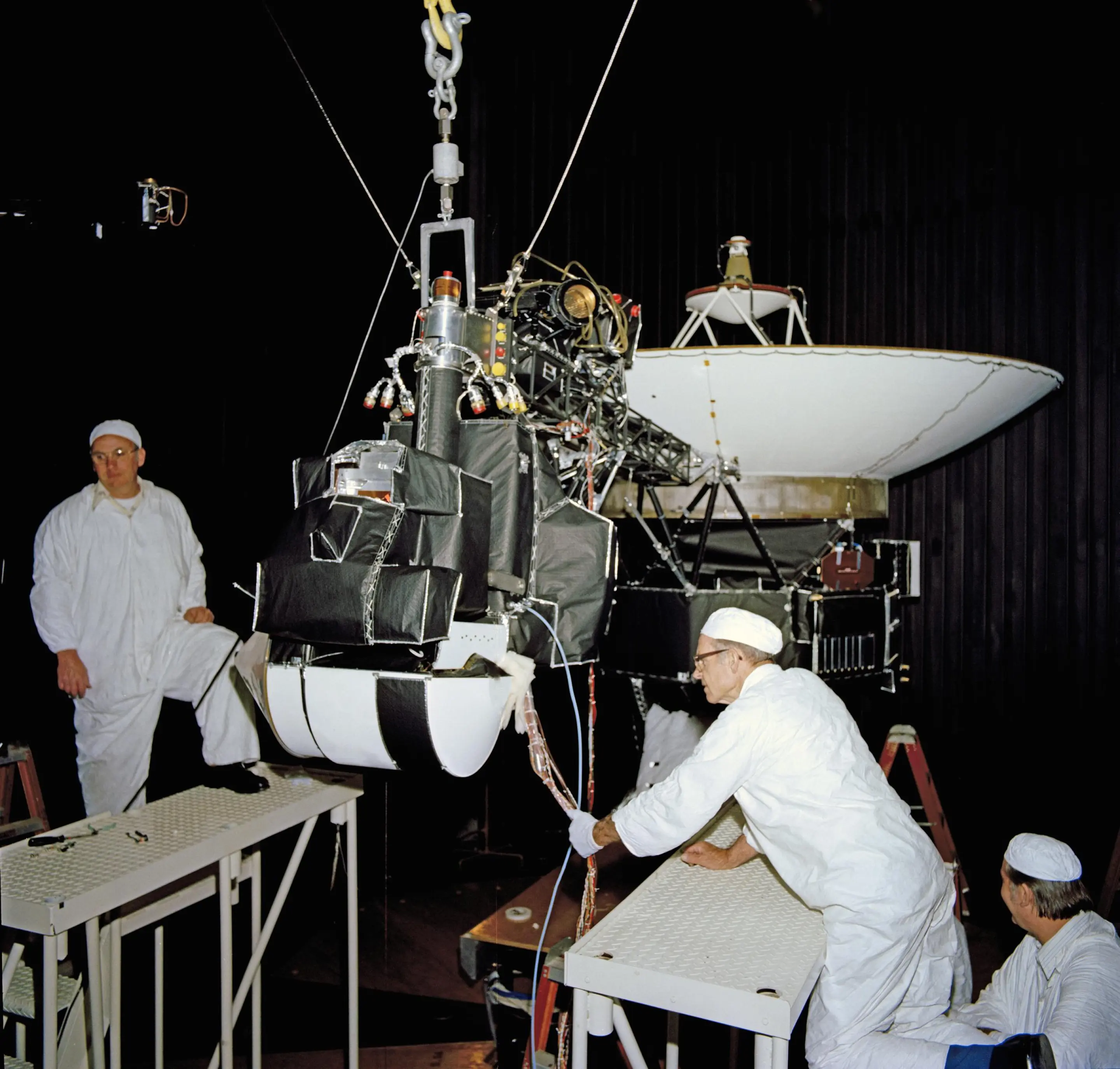
NASA’s historic Voyager 1 probe is about to reach one light-day from Earth—over 16 billion miles away—requiring 24 hours for radio signals to reach the farthest spacecraft in human history.
NASA’s legendary Voyager 1 spacecraft, already the most distant human-made object in history, is poised to cross a momentous cosmic threshold: reaching exactly one light-day from Earth. Traveling through interstellar space nearly 50 years after its launch, the intrepid robotic probe will reach approximately 16. 09 billion miles (25.
90 billion kilometers), or roughly 173 Astronomical Units, from our planet. At this extraordinary distance, radio commands dispatched by flight engineers from NASA's Deep Space Network traveling at the speed of light—approximately 186,000 miles per second—take a full 24 hours to reach the spacecraft's receiver, resulting in an unprecedented 48-hour round-trip communication delay for mission controllers awaiting status confirmations. Launched on September 5, 1977, Voyager 1 was originally designed for a four-year primary mission to explore Jupiter and Saturn.
After delivering groundbreaking observations of volcanic moons, complex planetary rings, and atmospheric storms, the probe embarked on an extended interstellar journey that transformed planetary science. In August 2012, Voyager 1 made history by breaching the heliopause—the outer perimeter of the Sun's magnetic bubble—becoming humanity's first ambassador to operate in the uncharted plasma realm of pristine interstellar space. Reaching one light-day represents both a triumph of 1970s aerospace engineering and a reminder of the staggering scale of the universe.
Traveling at an interstellar cruise velocity of roughly 38,000 miles per hour (61,000 km/h), Voyager 1 would still require roughly 18,000 years to travel just one light-year, and tens of thousands of years before passing anywhere near another stellar system. Operating on dwindling electrical power provided by its slowly decaying plutonium-238 radioisotope thermoelectric generators, the spacecraft continues to measure interstellar cosmic rays, magnetic fields, and plasma waves, defying expectations decades after its designed operational lifespan. Engineers at NASA’s Jet Propulsion Laboratory in Southern California continue to celebrate every milestone achieved by the veteran probe as they carefully manage its power and thermal reserves, turning off non-essential heaters and instruments to keep its primary scientific sensors active as long as possible.
Meanwhile, twin probe Voyager 2, which is flying along a different trajectory, is slated to reach the one light-day milestone in November 2035. As Voyager 1 sails silently into the interstellar expanse, its impending light-day milestone stands as an enduring testament to human curiosity and technological endurance on the cosmic frontier.
Nov. 15, 2026